
Getting to Know...Arkell Wilson
Softball: The Next Generation Is Arkell Wilson, 23
For the past two months we have shared with you the stories of our leagues in Memphis (BCSA) and the Twin Cities (TCGSL). Next month we will continue that series. However, throughout the month of June, as we celebrate Pride Month, we’re doing something a little different. Instead of featuring a league in a specific city, this month we are going to be sharing with you the stories of some of our exciting younger players from around North America. These players, all of whom are under 30 and who have fallen in love with their softball community, have unique-yet-familiar stories to tell about how they came to queer and inclusive softball, and what it’s meant to them. We believe many of you will be able to relate to their stories and hopefully you’ll come away with hope and confidence that the future of our community is in good hands.
Arkell Wilson came to Nashville from a small town just about 45 minutes away. He was 18 and wanted more work opportunities, and maybe a taste of life in a bigger city. He was gay, but he hadn’t really told many people yet, and certainly not anybody in his family.
About a year after the move, he met his now partner, Nicholas Cook, who, it just so happens, had been playing softball in the Metro Nashville Softball Association (MNSA) for about six or seven years.
For the first year they were together, Arkell would come and watch the games. He didn’t exactly know what to expect. As it turns out, what he found was a bit surprising.
“I was just watching a bunch of very funny, very kind people who I didn’t expect to meet,” he said.
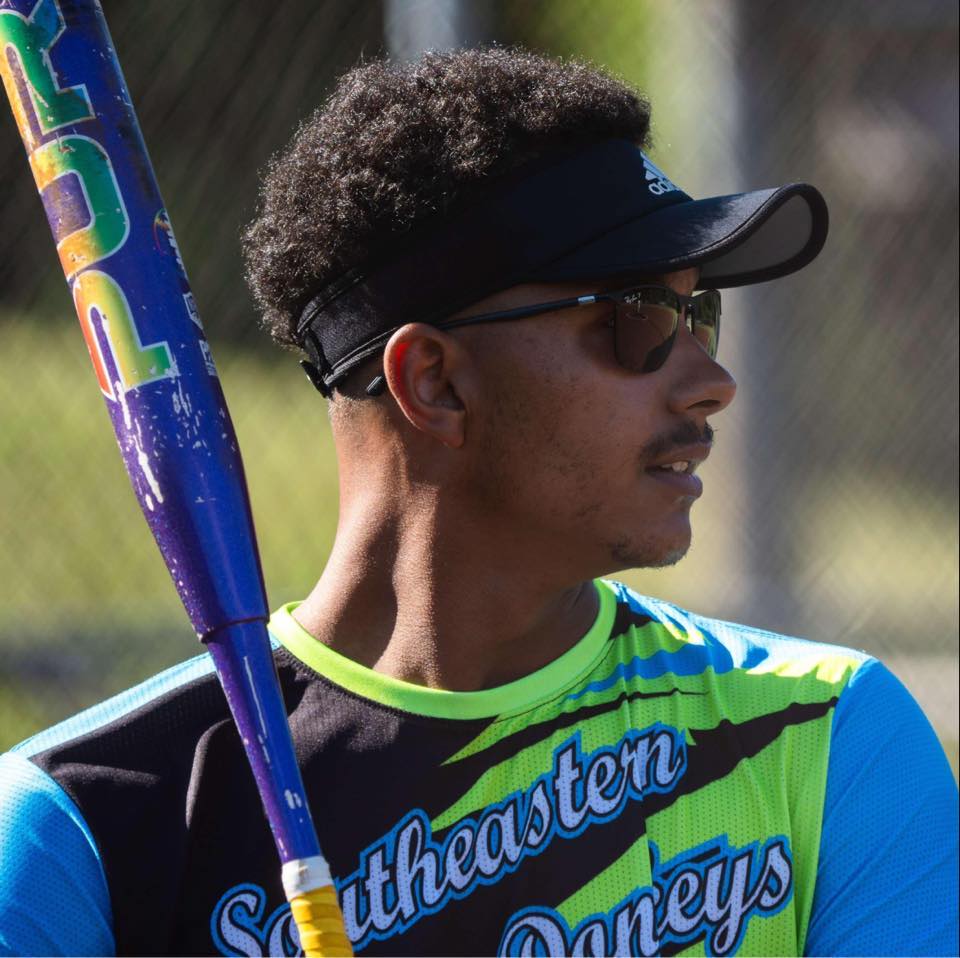
In 2024, one year later, Arkell went from softball boyfriend to softball player. Arkell’s partner played at the time in the E Division for a team called the Shady Stitches. So when Arkell decided he wanted to play, he was hoping to play for them. He knew people on the team already, and that’s a big deal. Arkell is naturally a shy person. Getting to know complete strangers … that’s a bit out of his comfort zone.
Unfortunately, the Shady Stitches didn’t have room for new players, so Arkell was placed on a team of mostly newer players and free agents in the E Division, a team called The Pink Panthers. But he was able to overcome his shyness and the group embraced him.
Not surprisingly, Arkell took to the sport pretty quickly and has really enjoyed softball. In fact, he’s become a frequent presence at tournaments, as a regular guest star for the Charlotte-based Swamp Donkeys.
“Our team wasn’t playing in the Music City tournament in Nashville this year, but I wanted to play,” Arkell said. So, he did what a lot of players do. He posted on the E Division Travel Pick-Up player page on Facebook. Before long, the Swamp Donkeys snatched him up, and he’s helped them snatch second place that year, and a few months later a 3rd place finish at the Hurricane Showdown in Ft. Lauderdale. A few months after that, the Swamp Donkeys would take home another second-place trophy, this time in Las Vegas.
After his success with the Swamp Donkeys, a Nashville-based D team, the Alphabet Mafia, picked him up to help bolster their outfield at the Gay Softball World Series in Las Vegas in October. The move would mean a jump up a division, but it was a challenge Arkell was ready for.
With all this experience, Arkell talks about how much he’s grown as a person as the result of joining MNSA.
“I was super shy,” he said. But now, this group of strangers are anything but. “It’s a second family. They taught me to be myself. From the first day to now, I’m a lot more open. Softball gave me the extra confidence.”
Arkell says how all that has changed how he looks at things, how he looks at himself. “From last year to this year I feel like I can talk to a lot more people, be a lot more open about certain things. It’s a big thing to be able to relate to people who have been through the same situations as I have.”
When asked what all that means to him, Arkell is clear. “It makes me feel stronger as a person. To be able to go out there and do what everyone else can do, on and off the field.
“I found my confidence a little bit.”
But what if he didn’t have this group he now calls family? “Probably if I didn’t have this, I would, ya know, be more timid,” he said. “It means a lot.”