
Getting To Know: Debra Jean Lowrey
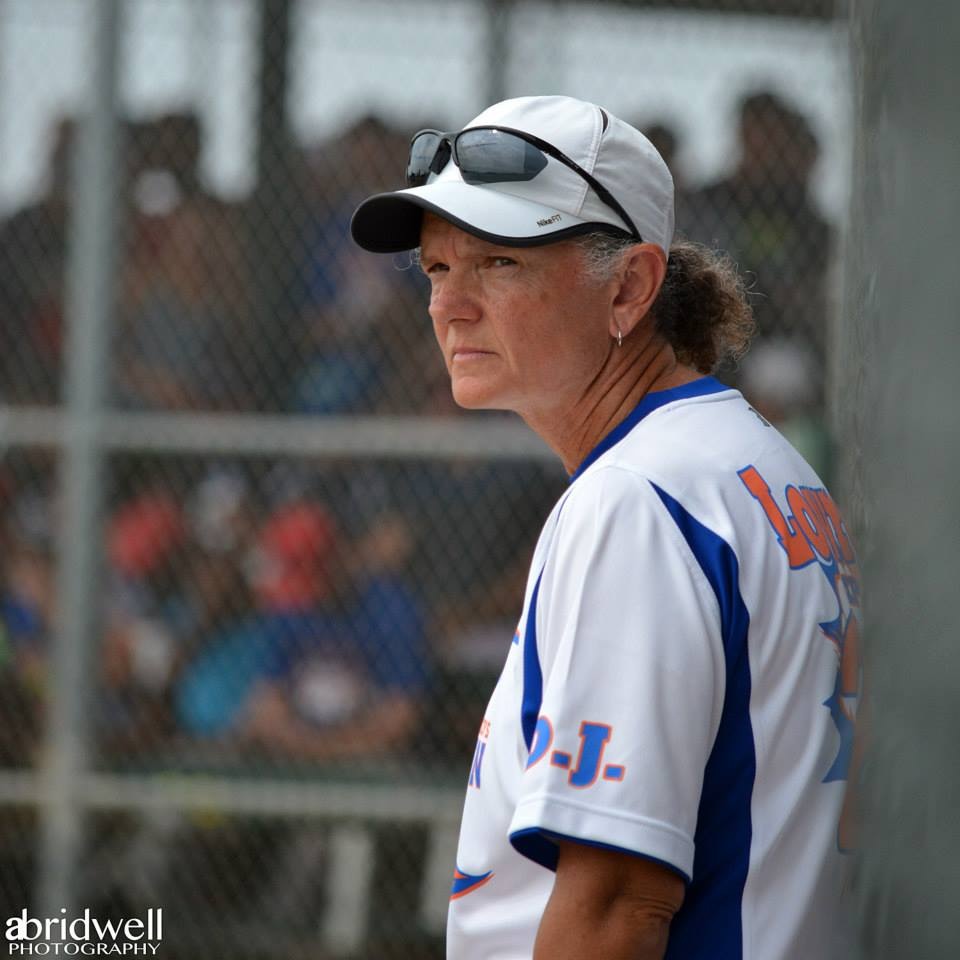
There isn’t much Debra Jean Lowrey hasn’t done on a softball field.
She’s played, she’s coached, she’s umpired, she been on a few boards, she’s volunteered for countless committees, she’s sold tournament swag, and, given that her girlfriends have all come from the softball community, she’s probably even fallen in love — all while being a constant presence on the field since she was about 15 years old and knowing she wasn’t like a lot of the other girls her age.
“I knew then I was different,” Lowrey said.
“I kept fighting it because I knew it wasn’t what I was supposed to be feeling.”
At about 16 she started hanging out with the older girls playing softball. “I always played with older women. They were grown, and I was a teenager.” Lowrey said it’s where she felt at home, at her most comfortable.
After the games, Lowrey would go and hang out with her team, even going to the bars. “They all thought I was an adult,” she said, and didn’t feel like she wanted to correct them. But, she said, it wasn’t without it’s drama.
There was a couple on the team that had broken up but were still playing together. “It took me a while to figure out why one of the women was nice to me and the other one was mean to me. It was because one of them liked me and eventually, she became my first girlfriend.”
In addition to her awakening, she also figured out that she felt most at home, most at peace, on a softball field.
She found a kind of safety there, as much as there could be in the 90s for a queer person in Texas. She found that she could kind of hide among these other athletic women on the team.
Lowrey would continue to play on these slowpitch women’s teams in the straight leagues in and around Dallas, and, eventually, would start umpiring.
It was as an umpire that she first became acquainted with the Pegasus Slowpitch Softball Association (PSSA), the queer league in Dallas.
In 1988 the Gay Softball World Series was coming to Dallas, and they needed experienced umpires. Since Lowrey had grown up playing the game and now had several seasons under her belt as a blue, she was asked to help out.
“I was young and needed the money, so I said I’d do it.” But she admits she didn’t have high expectations. “I thought there’s no way these gay boys are going to be able to play competitive ball.”
During the tournament, she had a break from umpiring what was then called the “Rec Division” by NAGAAA, so Lowrey walked across the street to watch some “Competitive Division” games.
She was very impressed.
“I was like, what is this? Gay men can play softball? I love this,” Lowrey said.
Then something happened, a kind of switch turned on for the veteran ballplayer.
Softball had been a big part of her life, in many ways it was half of her identity. The other half was as a queer woman. While she had spent the last several years threading the needle between the two, she had now become aware of an organization where the full measure of her identity could be combined.
She could be her, all of her.
“I found where I was supposed to be,” she said. “So I started working towards being able to be there all the time. I didn’t start being a regular until 1993, but I’ve been there ever since.”

When she joined as a player, initially it was with what was then called the NAGAAA Women’s Division. She would coach and play on the Women’s side and umpire on the “Open” side.
She would be a fixture in the NAGAAA Women’s Division for about 15 years. She would even be inducted in the NAGAAA Hall of Fame in the Women’s Division in 2004. But in 2008, the two divisions would go their separate ways. NAGAAA Women became ASANA and by then, Lowrey had too many friendships on both sides to leave either. “I played in both leagues, women’s and open after they split.”
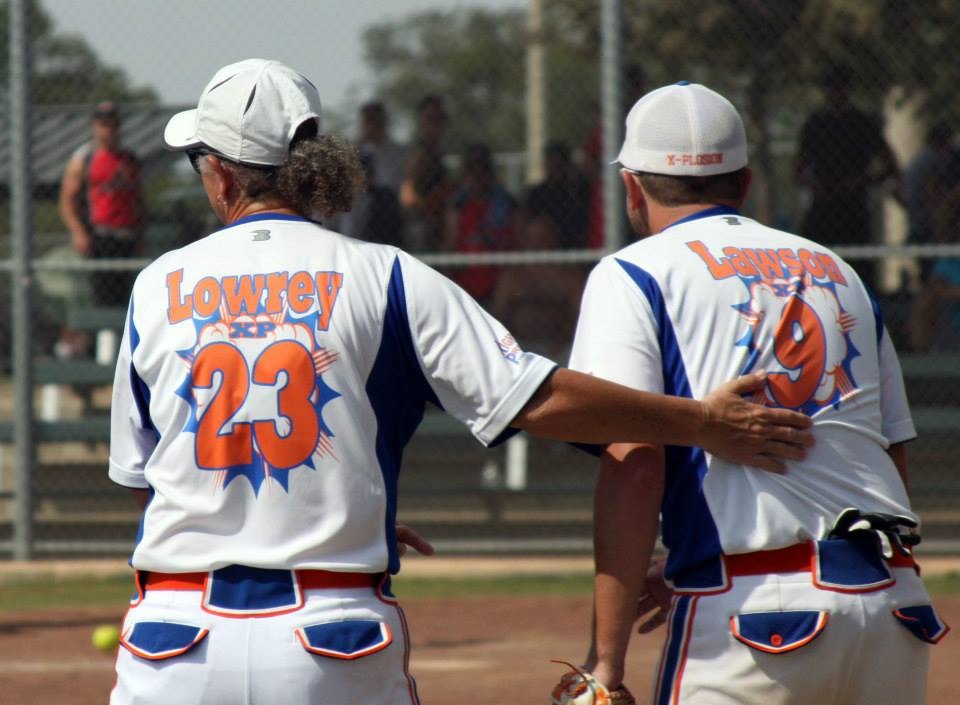
Known as a great teacher of fundamentals and for building chemistry on teams with many different personalities, in 2011 Lowrey would be asked by her mentor Matt Miller to get into coaching in the Open division . “Matt Miller and Chris Lawson asked me to coach the Dallas Woody’s Explosion in the B Division. I thought that was amazing, so I said yeah! I was very excited to be able to coach such a great group of guys that were very good at the game that I love so much.”
She would coach for 10 years, teams like Woody’s Explosion and Woody’s Smash. But she didn’t limit her coaching to the B Division teams. She would also coach teams in C and D.
“At one point I coached six teams. I loved working with so many great people, but I don’t recommend coaching that many teams at once. Two teams is a great number to coach at one time.”
It turns out Miller, who got her into coaching and, who at the time owned the bar Woody’s in Dallas, would play a big role in Lowrey’s life, both on and off the field.
“He helped with my business. He’s helped keep me involved in gay softball. He would teach me anything I asked him.”
When the PSSA would host the GSWS again in 2004 and 2014, “I was involved because of him.”
Lowrey last played on the field in the 2021 GSWS in Columbus as part of the Dallas Fossil Fuel, a Legends D team, that managed to make it all the way to Championship Saturday. “It was amazing to be playing again with the boys,” she said.
Now, you’re more likely to see her at the swag tables with her company, Right Choice Pride, selling official t-shirts, hats, and other iPride merchandise. She’s been the official merchandiser for iPride since 2015.
Prior to her role in that capacity, she served on various iPride committees, including at one point as the assistant tournament director for the 2015 GSWS in Columbus.

In 2017, Lowrey was inducted into the NAGAAA Hall of Fame a second time, this time for her work separate from the Women’s Division, making her one of the first to be inducted on both sides.
Lowrey has a lot to be proud of for what she’s brought to queer and inclusive softball over the last 38 years.
When I asked her to tell me the thing about which she’s most proud, she paused.
“I passed on my love of the game,” she said. “I can still go to tournaments now and see some of those players I coached still playing, moving to harder positions and moving up the divisions.
“Some of the players I’ve coached are now coaches themselves. Some of them have come up to me and said ‘I coach the way you taught me, Debra.’” This really makes my heart smile and the feeling that I get, I just can’t explain.”
It is an unfortunate truth that in our broader queer community not everybody finds their place. Even in our specialized community that is this queer softball movement, not everyone finds their family.
Lowrey has.