
Getting to Know…Frank Pichinini, 74

Frank Pichinini isn’t just a queer softball legend — he practically invented the concept.
No, literally. In 2009 he first petitioned the national leadership to create a division of play exclusively for those who were 50 and above. After two years of long conference calls and heavy debate, what we now know as the Legends Division was born.
“I knew there were a lot of people who wanted to continue to be able to play but couldn’t necessarily play on really competitive teams like they used to,” the NAGAAA Hall of Famer said. Creating the division aligned with similar rules USA Softball had already adopted and Pichinini said “I felt like it was time for us to do that, too.”
In 2011, the Legends division debuted at the GSWS with less than a handful of teams and only one division. Growth was slow, at first, but eventually the idea caught on. Regional tournaments across the country started seeing that adding the division could add more teams, and more revenue. Some leagues even now have entire Legends divisions and most leagues have teams designated as Legends playing in their regular C and D Divisions. In fact, Pichinini told me during our talk that for the first time in the Seattle league’s history, a Legends D team, the Silverbacks, won the division for the Spring 2025 season.
Pichinini knows a lot about Seattle, which makes sense when you learn that he served ten years as the Emerald City Softball Association (ECSA) Commissioner and another ten years in other various board positions. He also led the team that brought the Gay Softball World Series to Seattle in 2008. In fact, the ECSA is the only league he’s ever played in.
He first arrived on the softball scene in 1992, as a 40 year old man freshly divorced and freshly out of the closet. “I was in a new relationship,” Pichinini said, “but I didn’t really have any gay friends.” He had played softball earlier in life and a friend of his then partner suggested he try the gay league in Seattle.
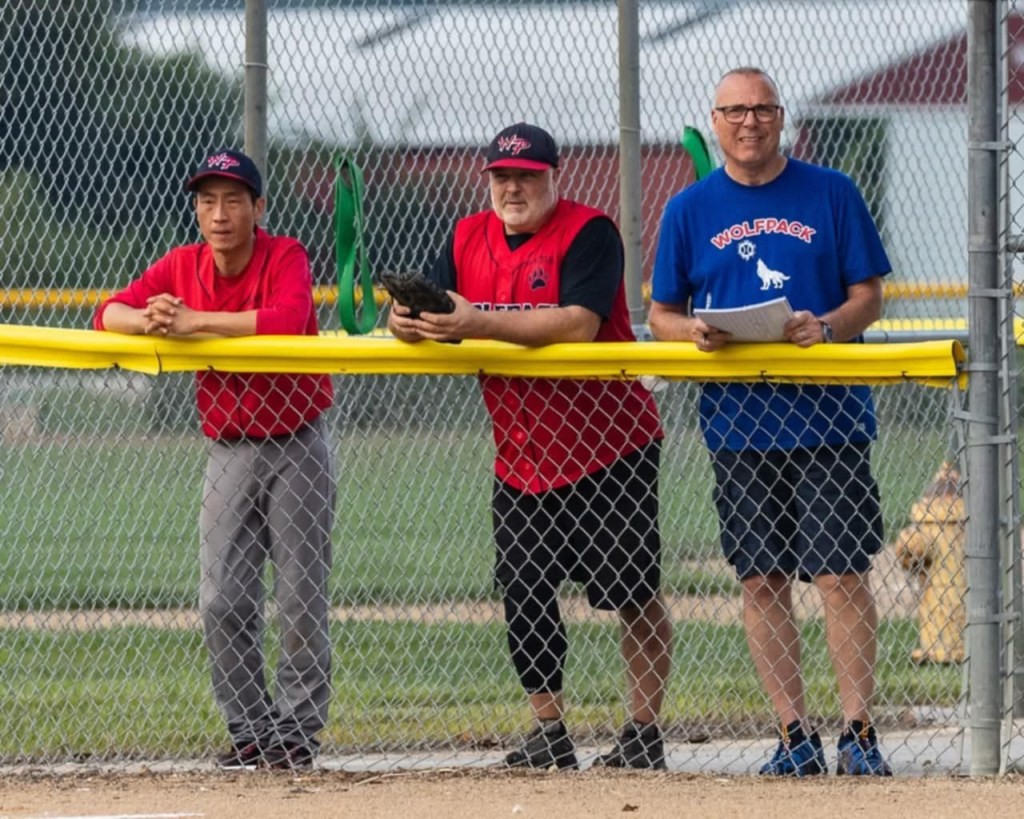
“I had no idea what gay life was like, or anything,” he said. At the time there were only a few teams in the league, but it was enough for Pichinini to feel something special.
“It was wonderful to meet so many gay people,” he said. “It felt wonderful, to be able to go play softball and be myself and not have to hide who I really was.” Pichinini said that, to this day, he’s still close with some of the people he met on that day 33 years ago. “Some of them have become my really good friends.”
Pichinini says that finding queer and inclusive softball “helped me immensely.” He says it helped him come to terms with his new life.
That gift is what motivated him to become involved with how the league ran by becoming a board member.
“When I got on the board, one of my main objectives was to ensure the same accepting experience I encountered when I joined the league continued or become better. it became about providing the same experience for those who were just coming out,” Pichinini said.
“I wanted to make sure that I was helping create a welcoming experience. I wanted to help anyone who wanted to play find a place for themselves — a place where they could fit in.”
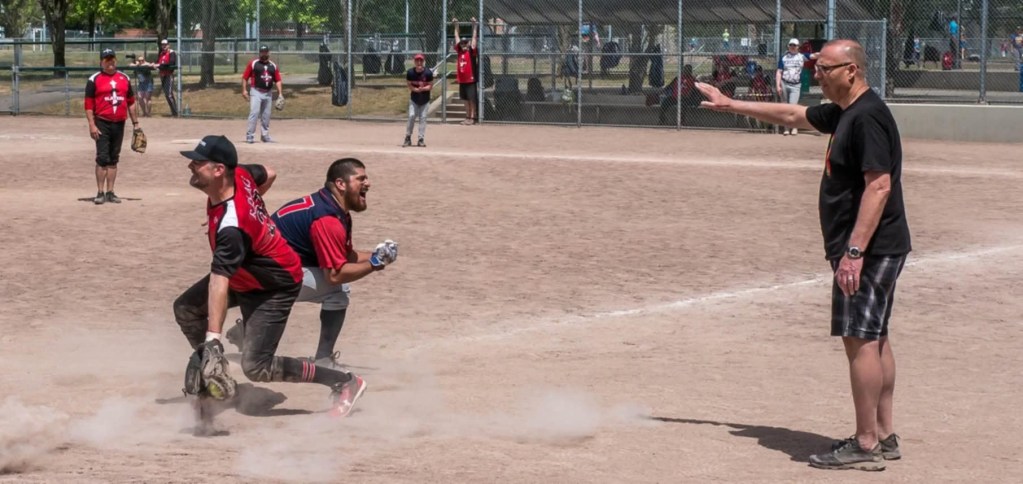
That’s been his approach to coaching as well. Pichinini has coached teams in the ECSA for more than 30 years. He’s helped others find their place and built lasting relationships throughout the organization.
“When I look at the Seattle league, I see so many different people that I’ve coached at some time or another. Whether it’s been in league or as a pick-up for tournaments or a world Series team or to play in a local league. When you coach someone you get to know them much better then just playing against them. I loved to pick up players to play on tournament teams and I so enjoyed the experience of getting to know them better – that includes players from other cities.
Pichinini looks back at his softball career and the legacy he’s left behind with a sense of pride: Two GSWS championships, three GSWS placements (a 2nd, 3rd & 4th), participating in 28 World Series overall, hosting the World Series in 2008, and all the great friendships and relationships created playing and coaching for 30 years in NAGAAA/iPride softball.
“I feel fortunate and thankful for everything I’ve been able to accomplish, and being able to pass the baton onto others that will keep it going, continuing to make it a welcoming place for everyone.”