
Getting to Know...Minneapolis
Minneapolis:
Putting The “Good Time” In Softball
By Roman Jimenez
In April 2025 this space featured a story about the origins and history of the Bluff City Sports Association in Memphis, along with information about the NAGAAA Cup later that month. That piece was the beginning of a series of articles that seeks to tell the stories of individual leagues and our players. Over the next several months we will seek to tell the stories of leagues and players from the middle of America to the Canadian provinces, as well as those on both coasts. By sharing these stories we hope to not only highlight the great work that goes on, but also find those common threads that link us all together, our shared experiences and our shared histories. In so doing, we hope to tell the “iPride Story,” which really is “Our Story.”

The Twin Cities Goodtime Softball League (TCGSL) officially started in January of 1980 with four teams. Three months later they became the seventh official member of an upstart North American softball movement called NAGAAA. In the 45 years since then, all they’ve done is host the Gay Softball World Series twice, and grow to be the largest queer softball league in North America and, probably, the world.
Chris Overlie is the commissioner of the TCGSL and he’s in his 5th year in the role. According to him, the league has 60 teams and over 1000 players playing in the Spring 2025 season. That’s up from just 35 teams at the start of the COVID-19 pandemic in 2020.
So how did a 40 year old league grow to nearly double it’s size in just five years? “It’s all
about the player experience for us,” said Overlie. “We really focus on the ‘Good Time’ in the Goodtime Softball League.”
Part of that experience, says Overlie, is paying less attention to divisions and ratings during the season, and much more attention to making sure players who want to play together can, “with some guiderails for player safety purposes, obviously.” Overlie explains.
That isn’t to say the TCGSL ignores player ratings, not at all. They have a rigorous ratings process and teams know that when they travel to tournaments they must strictly adhere to ratings guidelines, and they do.
It just means that when it comes to the Spring season, the TCGSL lets those best friends with different sets of skills play with each other on the field.

“We create an experience every week that’s all about the player,” Overlie continued.
In addition to a system that allows for friends to play on the same team, the TCGSL also has a field complex that allows all the teams to play in the same location. Overlie said that ability encourages teams and players to stay at the complex and support each other. “It adds to the culture and player experience,” Overlie said.
Keeping the focus on the player experience is, for Overlie, a personal drive.
“I don’t know where I’d be without softball,” Overlie said. He joined the TCGSL in 2002, as a young kid with speed. He didn’t know what to expect.
“I grew up in rural Wisconsin,” he said. “I didn’t have a single non-white person in my school, let alone a gay kid who was out. I moved to Minneapolis the day after I graduated. I was young. I didn’t know who I was as a gay person.”
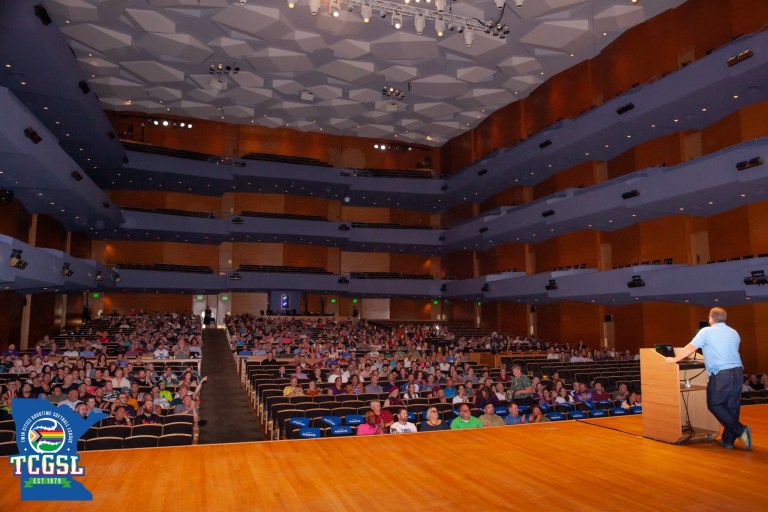
Little did Overlie know, he would find himself in softball when an online acquaintance, which has since turned into a 23-year friendship, lead him to the TCGSL.
“The first person I met,” Overlie said, “was Greg Moser.” Moser, who captains the team The Flamingos, is a 2023 NAGAAA Hall of Fame inductee.
Overlie joined Moser’s Flamingos team and continues on it to this day, though he hasn’t laced up his cleats for them every single year. That’s because Overlie’s life has taken him to a few different cities over the past 22 years.
Despite all those relocations, softball has been a constant in Overlie’s life. After the first few years of finding his friends and chosen family in the TCGSL, he has made it a point to try and repeat that experience wherever his job has required him to live. “Every single city I find myself in,” he says, “I would join the softball league right away.”
Now back in Minneapolis, Overlie has added to his TCGSL Commissioner duties by taking on the massive responsibility of IT Manager role within the iPride Softball organizational structure. “I spend as much time on that as I do my real job,” he only half-jokingly said.

Looking back on his experience with TCGSL and iPride writ large, Overlie describes it in simple terms. “It’s been a life-changer. It’s helped me figure out who I am, who I want to be.”
Even though it’s been 22 years since he first stepped onto a Gay Softball World Series field, Overlie remembers it vividly, especially the legendary “Parade of Cities” portion of each GSWS opening ceremony.
“As a young kid from rural Wisconsin, sitting out there on the grass with thousands of other gay people, more gay people than I’d ever seen,” Overlie said he felt a sense of belonging, that he was where he was supposed to be.
“I don’t know what I’d do if I didn’t have softball,” Overlie said. Even though he spends more time working on softball than he spends away from it, he says the transaction is worth it. “If I can help one person experience that same sense of belonging,” Overlie says, “it will be a life-changer for them.”
Overlie isn’t alone. He’s one of thousands of players and coaches and fans who have found their calling and “family” on the fields with TCGSL.
But just how the league got started, well that part might surprise you.
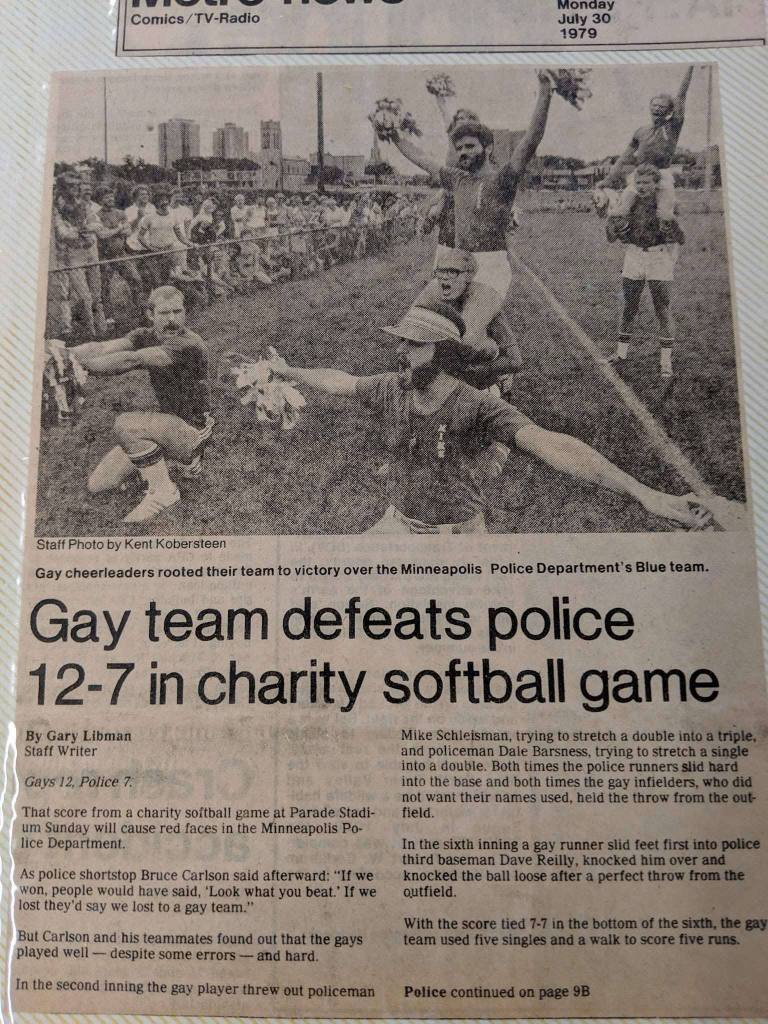
Like all good ideas, the idea to start a gay softball team started one night in a bar, specifically at The Saloon on May 6, 1979, a legendary bar in central Minneapolis. That night a team was formed and joined the Minnesota Gay Athletic Association, which had already established the “Goodtime Bowling League.”
That summer the team would play a variety of charity games throughout the city, gaining popularity and a bit of a fan base as news of the team spread.
Things really escalated when the team agreed to an exhibition game against the Minneapolis Police Department’s “Blue Team” on July 29, 1979. News of the pending match-up got out, and on game day hundreds of fans spilled out of the bleachers and down the third-base line supporting the team sponsored by the Saloon. Male cheerleaders even came out to support their boys, wearing green and white uniforms. Enthusiasm was high for the police team as well, with dozens of fans cheering for them.
To perhaps everybody’s surprise, the Saloon beat Blue Team 12-7. The event wound up being covered by the local television stations. The next day the front page of the Metro section of the Minneapolis Tribune heralded “Gay Team Beats Police 12-7 In Charity Softball Game.”
There was enough interest in queer and inclusive softball as a result of the success of the Saloon team and the coverage it received, that TCGSL was started the following year with four teams playing a 9-game schedule.
Since then the TCGSL has gone on to host the GSWS in 2012 and again in 2023. As of this writing, the league has 160 Legends-eligible players (that’s 50 years old and above), and 105 players who land between 45 and 49 years of age. That’s about 26 percent of their overall population.
Reaching out to new and potentially younger players falls on the shoulders of TCGSL’s Stacey Clark, who is officially responsible for what the league calls “Player Experience.” It’s a big role, especially since, according to Overlie, the league puts on an expensive closing party each year meant to celebrate the friendships and accomplishments met during the season.
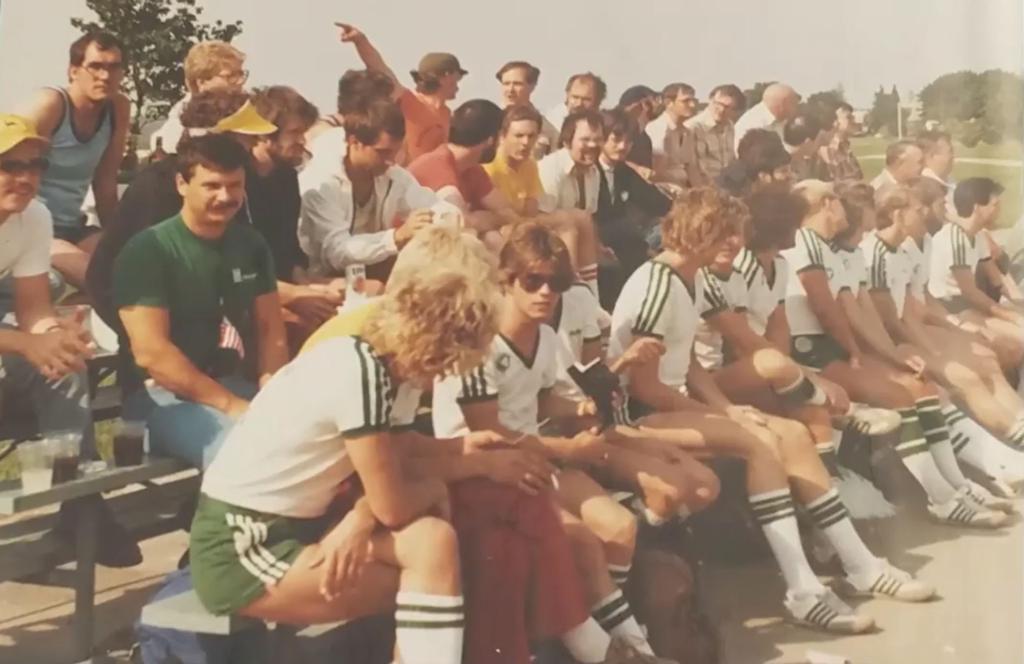
One of those events is the North Star Classic, an annual tournament held in Minneapolis and put on by the TCGSL each year. This year 64 teams are expected to make the trek north over the Memorial Day weekend. The tournament will have six divisions, a combined A/B Division, as well as, C, D, E, Legends C and Legends D. The tournament has a 5-game guarantee, with 3 pool play or round robin games, and then a double-elimination bracket across all divisions.
The tournament will use just two large field complexes in a Minneapolis suburb called Eagen, the Northview Park Athletic Field (980 Northview Park Road, Eagen MN), and Lexington-Diffley Athletic Field (4201 Lexington Avenue South, Eagen MN).
Minneapolis is not the only city hosting a tournament during Memorial Day, of course.
The four other cities with Memorial Day weekend tournaments are:
San Franciso/San Jose – Golden Bear Classic
Philadelphia – Liberty Bell Classic
For more information about TCGSL, including the North Star Classic, visit www.tcgsl.org